
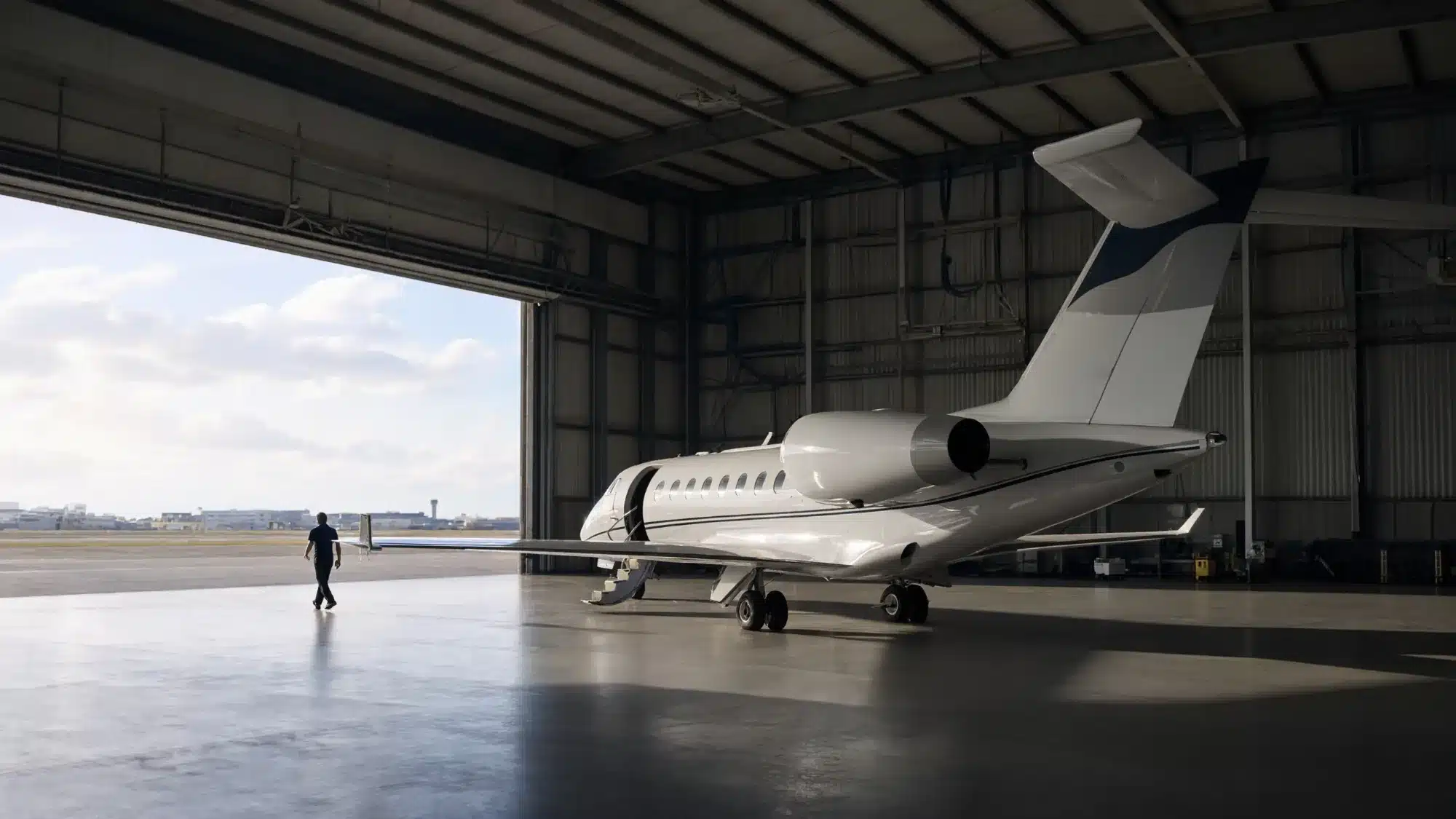
Jets come to us for two reasons, and both are ordinary. An inspection or an engine event costs more than the airframe is worth on the open market. Or a company folded, an owner died, and an asset that costs thousands a month to hold now belongs to people who never wanted it. Citations, Learjets, Phenoms, the occasional Westwind or Premier. Nobody here will make you justify why the airplane stopped flying.
What we take care of
A jet out of program bills you every month it sits. Our job is to end that as quickly as the records allow, and to do the work without involving you in it.
What shapes the plan for the aircraft
Three things, in this order.
Inspection and program status. Where the airframe sits against its heavy checks, and whether the engines are enrolled on a program, shapes everything that follows. If you do not know, we will find out — the status page and the last sign-off are usually enough for us to work from.
Mandates and airworthiness directives. On an older jet, an avionics mandate can exceed the airframe's market value. That decides whether the aircraft flies out or is dismantled where it stands, and it does not change whether we accept it.
Records completeness. Dirty logs, missing back-to-birth traceability on life-limited parts, gaps in the modification history. Send what exists, in whatever state it is in. We have yet to see a set of records too disorganized to work with.
Crews, permits and teardown
An airworthy jet is flown out by a type-rated crew under our insurance. An aircraft that cannot be made airworthy economically is evaluated for parts recovery — engines, APU, avionics and landing gear carry most of the value — and the hulk is dismantled and recycled rather than left sitting on your ramp.
Ramp and hangar fees accrue until the aircraft is gone, so the schedule is built around your billing date. Where there is a lien, a lease or a fractional interest, we resolve it before the aircraft moves rather than after.


Tell us about the aircraft
Three short steps. Only your name, phone and email are required — everything after that you can answer from memory, skip, or leave to the phone call. Nothing here commits you to anything. We carry the cost of pickup, transport and filing; an appraisal, where one is required, is the donor's own expense.
Rather talk it through? (888) 228-7320
An intake coordinator reads every submission and calls you back. We never sell or share your information.
What you can deduct for a jet
Jets are the class where deduction basis varies most, because the outcome varies most: a sale to an operator, a placement with a training program, or a parts recovery are all common and all valued differently. Above $5,000 you will need a qualified appraisal regardless of route, and we will tell you which route yours is on well before you file.
| Situation | Deduction basis | Documents |
|---|---|---|
| Sold with life remaining on components | Gross proceeds of the sale | Form 1098-C within 30 days of sale |
| Taken by a maintenance school as instructional equipment | Qualified appraised value, as significant intervening use | 1098-C with the intervening-use certification |
| Timed-out airframe recovered for parts | Proceeds of the recovered components | 1098-C reflecting the recovery |
| Operator-owned and depreciated | Limited to adjusted basis; recapture applies | Your CPA should confirm before you assume a figure |
Giving Center cannot value your aircraft and cannot hire your appraiser — the IRS requires that independence, and above $5,000 the qualified appraisal is the donor's responsibility and expense. Rules for vehicle and aircraft gifts are set out in IRS Publication 526, valuation in Publication 561, and the acknowledgment requirement in the Form 1098-C instructions. Claims above $5,000 also need Form 8283 Section B. Nothing here is tax advice; confirm your own figures with your CPA. Full tax detail · FAA paperwork
Models in this class



Related situations: no logbooks · damaged or AOG · inherited aircraft · aircraft with a lien
Ready when you are
Type, hours, logs and where it sits. That is enough for a real answer on the first call. Pickup, transport and filing are ours to cover.