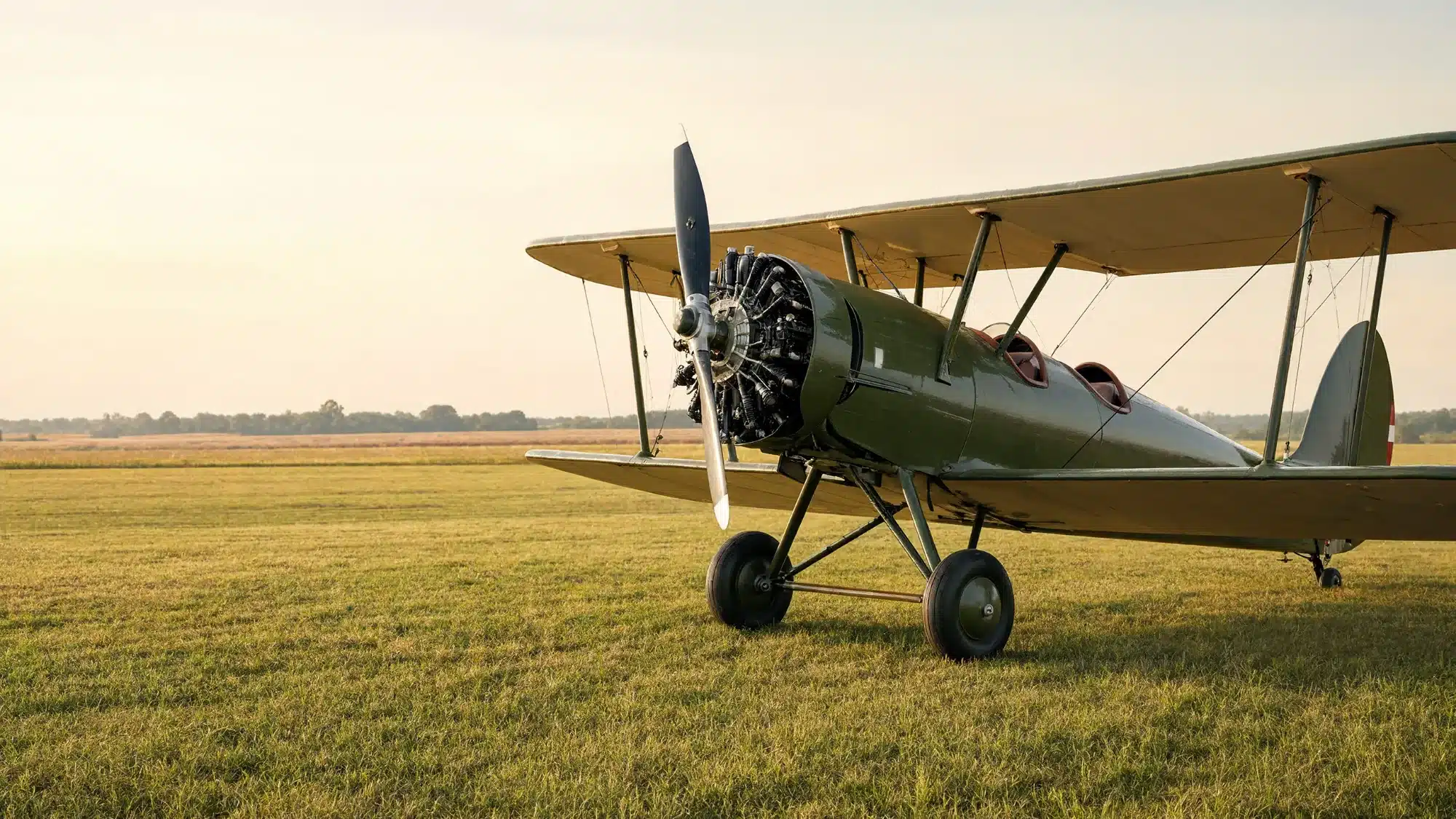
Stearmans come to us from owners who can no longer fly them and from families who inherited one along with fifty years of history. These are among the most recognisable airplanes in the country and there is genuine demand — ride operators, restorers and collectors all want them — which means the question is rarely whether yours has a future, but which future serves you best. A typical donation is a restored or partly restored PT-17 or N2S with a Continental or Lycoming radial, fabric of uncertain age, and an annual that has lapsed since the owner stopped flying.
What moves the number on a Stearman
Fabric and when it was recovered. Covering process, approximate date and who did the work. On a biplane there is a great deal of fabric, and a recover is a major cost, so this is the first thing a buyer prices. Incomplete paperwork on a decades-old restoration is entirely normal here.
Which radial, and its parts supply. A Continental W670 or Lycoming R-680 with a recent overhaul and a shop still supporting it is a strong asset. A rarer engine with no overhaul source is a different conversation, and occasionally the airframe carries more value than the powerplant.
Wood, steel and what is under the fabric. Wing spars, ribs and the steel tube fuselage need inspection records, and corrosion at the cluster welds is where the surprises live on these airframes. We would rather establish it early than discover it during disassembly.
Provenance and restoration records. Restoration photographs, prior registrations, agricultural or military service history, and any museum documentation. On this type provenance genuinely moves the value, so bring whatever exists even if it is a shoebox of photographs.
How a Stearman gets to us
A flyable Stearman is ferried by a pilot with tailwheel and type experience — we do not put a low-time pilot in one to save a truck fee, and open-cockpit ferrying is planned around weather rather than a schedule. An aircraft under restoration moves exactly as it sits in your shop: wings crated, fuselage on a cradle, parts boxed and labelled, with our crew doing the packing. Both routes are at our cost.
What the first call covers


What you can deduct for this aircraft
Stearmans are the class where retention and display are most likely, and that changes the arithmetic. An aircraft sold to a collector or ride operator gives you gross proceeds on Form 1098-C. One retained and flown or displayed by a museum or foundation is significant intervening use, and your deduction rests on a qualified appraisal instead — frequently the larger figure. Where we can place an aircraft with an organization that will keep it flying, it is worth discussing before anything is signed.
Vintage values rarely follow an obvious sale comp, so an appraiser who knows the type matters more here than anywhere else. The appraisal is the donor's expense and choice; we sign Form 8283 Section B as the recipient charity.
Rules for aircraft gifts are in IRS Publication 526, valuation in Publication 561. Nothing here is tax advice — confirm your figures with your CPA. How the deduction works · FAA paperwork
Other models in this class
Start with the N-number
We will pull the registry record before we call you back.