
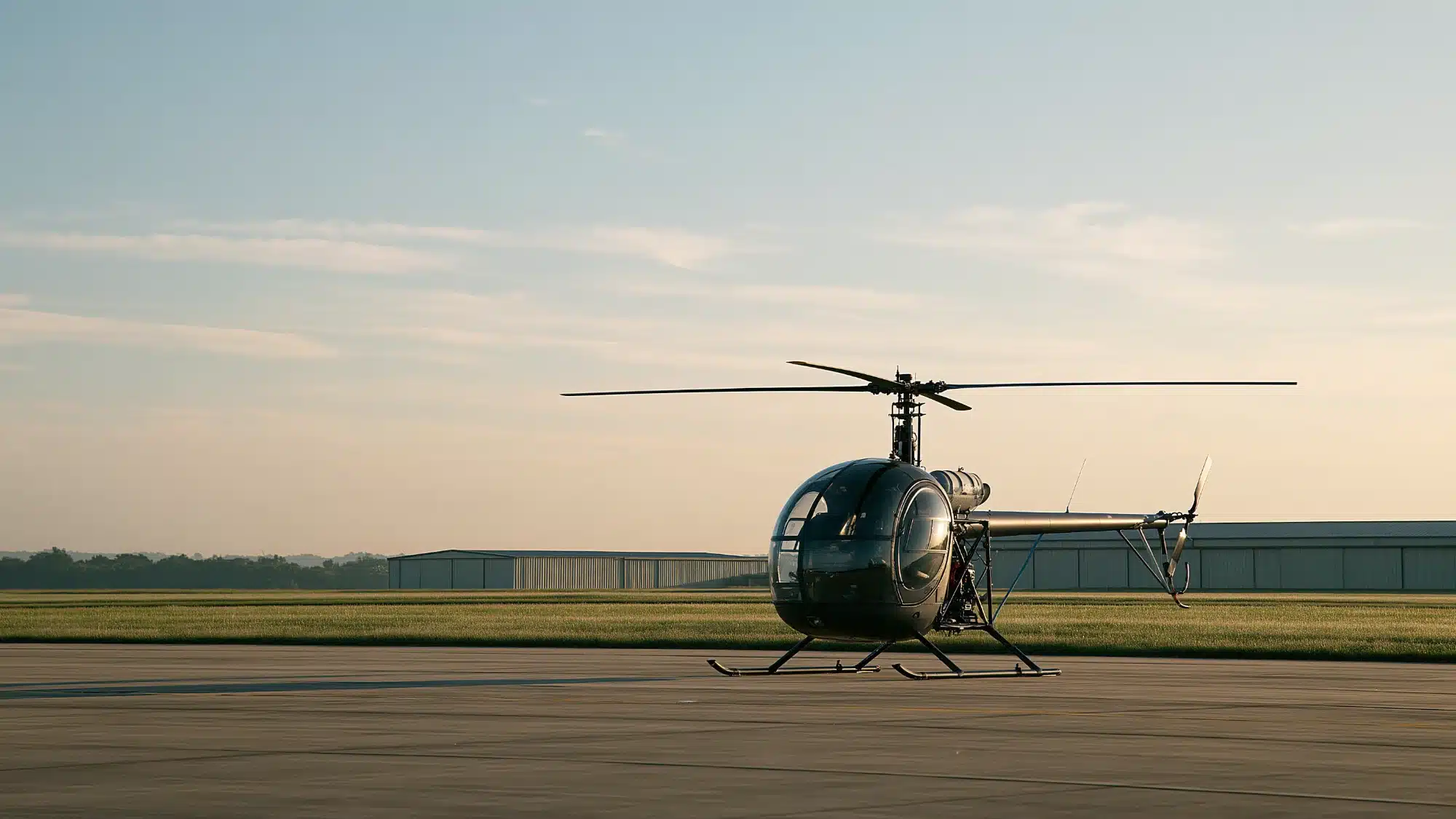
Schweizer 300s reach us from flight schools updating their fleets, from agricultural and patrol operators, and from private owners who bought one to build time. The type descends from the Hughes 269, so donations range from early 269s to late 300CBi models, nearly all with a Lycoming HIO-360 and a three-blade fully articulated rotor. The airframe is simple and tough, and there is steady demand for flyable aircraft, for training airframes and for dynamic components.
What moves the number on a Schweizer 300
Component times and retirement limits. Main rotor blades, the transmission, the tail rotor gearbox and many drive components carry their own hour or calendar limits. Tell us hours remaining on each major component, or send the component status sheet. A helicopter with most of its blade life left is a very different asset from one with blades due.
Belt drive and dampers. The 300 transfers power through belts and has dampers at the rotor head that age on the calendar. Their condition and replacement history tell us how the aircraft has been maintained. Neither is a reason to turn the aircraft down.
Engine and training history. The HIO-360 has its own overhaul interval, and training aircraft accumulate starts and hard use. Give us the SMOH and whether the aircraft flew in a school. Any hard landing, overspeed or sudden stoppage changes the status of the dynamic components, and the records should show it.
Storage and corrosion. A helicopter parked outside for years needs its drivetrain inspected before anyone turns the rotor. We arrange that inspection rather than assume, and we ask about corrosion on the tail boom, the frame and the skids.
How a Schweizer gets to us
Helicopters are rarely ferried far. Most Schweizers move by truck: blades removed and crated, the aircraft secured on a trailer, handled by an A&P who has worked the type. If it is airworthy and the distance is short, a qualified pilot can fly it to a nearby field for loading. Every route is at our cost.
What the first call covers


What you can deduct for this aircraft
A flyable Schweizer usually sells, so the deduction is normally the gross proceeds reported on Form 1098-C, and most clear $5,000, which brings in a qualified appraisal and Form 8283 Section B. A timed-out Schweizer that goes to a maintenance training program and is put to work there may support a fair market value basis instead. Budget for the appraisal as your own expense; the IRS requires it be independent of us, so we cannot choose or pay for yours.
We sign Section B as the recipient charity, and the IRS requires your appraiser be independent of us.
Rules for aircraft gifts are in IRS Publication 526, valuation in Publication 561. Nothing here is tax advice — confirm your figures with your CPA. How the deduction works · FAA paperwork
Other models in this class
Start with the N-number
We will pull the registry record before we call you back.