
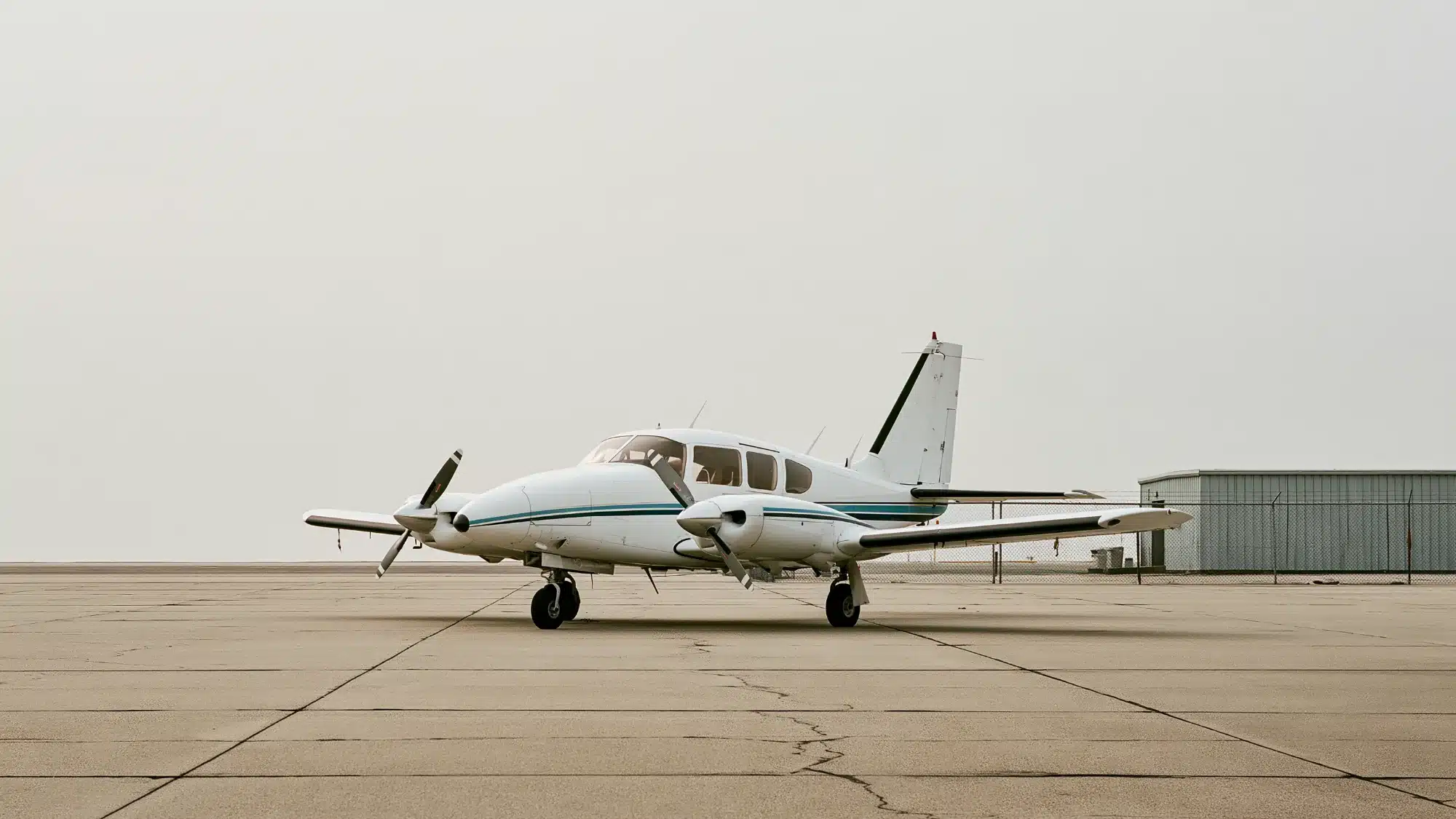
Aztecs reach us from owners who flew them as six-seat family twins, from survey and freight operators retiring a fleet, and from estates. Production ran from 1960 to 1981, so most donations are 1960s and 1970s airframes with a pair of Lycoming O-540s or IO-540s, some turbocharged, and a panel that has been changed more than once. The type is simple and sturdy, and there is a steady market both for flyable Aztecs and for their parts.
What moves the number on an Aztec
Two Lycomings, and whether they match. The O-540 and IO-540 carry recommended TBOs around 2,000 hours, lower on the turbocharged variants. Mismatched times are common and workable. Give us the SMOH on each engine and how long either has been sitting.
Hydraulic gear and flaps. The Aztec's gear and flaps run on a hydraulic system. Leaks, pump condition and the last gear swing tell us how the airplane has been kept. None of it is a reason to turn the airplane down.
Cabin heater and fuel cells. Most Aztecs carry a combustion cabin heater with its own recurring inspection, and fuel cells that age whether or not the airplane flies. If the heater is placarded inoperative or a cell has weeped, say so; it shapes the ferry plan.
Corrosion and working history. Freight, survey and coastal flying leave marks. We look at the spar area, the belly, the control cables and the nacelles, and we ask whether the airplane carries camera ports or other modifications with 337s on file.
How an Aztec gets to us
Ferrying an Aztec needs a multi-rated pilot, insurance that covers the type, and two engines that both make rated power. If the annual has lapsed, we arrange the inspection, the logbook entry and the special flight permit. If either engine is doubtful we do not launch it: the wings come off and it moves by truck with our crew. Every route is at our cost.
What the first call covers


What you can deduct for this aircraft
Aztecs usually sell rather than being retained, so the deduction is normally the gross proceeds reported on Form 1098-C. Most flyable Aztecs clear $5,000, which brings in the qualified appraisal and Form 8283 Section B. Many Aztecs were owned by a business and depreciated; in that case the deduction is generally limited to adjusted basis, which is worth raising with your CPA before you assume a figure.
We sign Section B as the recipient charity, and the IRS requires your appraiser be independent of us.
Rules for aircraft gifts are in IRS Publication 526, valuation in Publication 561. Nothing here is tax advice — confirm your figures with your CPA. How the deduction works · FAA paperwork
Other models in this class
Start with the N-number
We will pull the registry record before we call you back.