
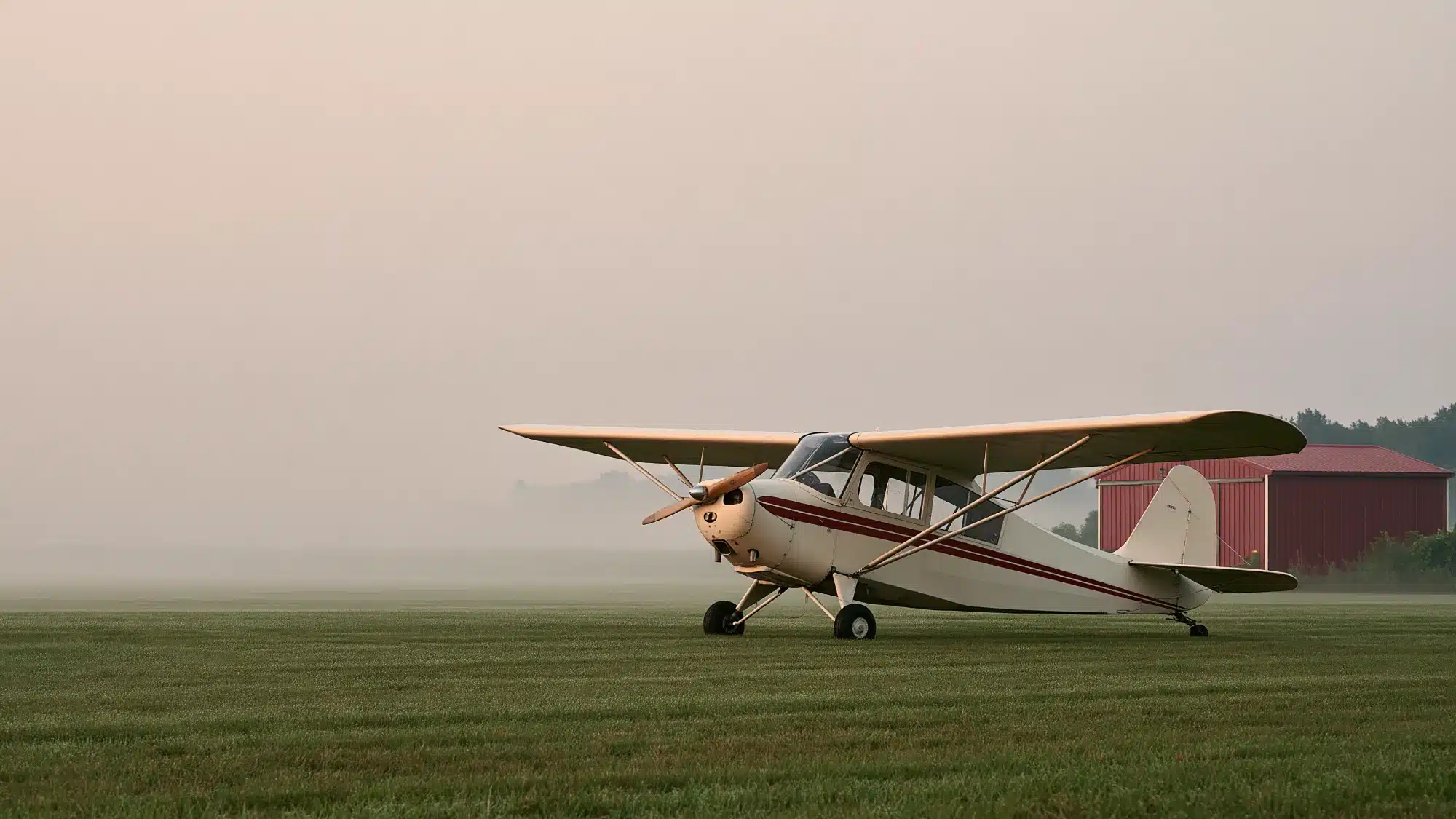
Champs reach us from long-time owners, from estates, and from restorations that stalled. Most are postwar 7AC models with a Continental A-65 or C-85, a steel-tube fuselage, wood-spar wings and fabric of varying age, along with later 7-series Champions. Values are modest but steady, and the right home is often a flying club, a tailwheel school or a restorer.
What moves the number on a Champ
Fabric, and when it was last done. Tell us the year of the last recover, the process used and whether the fabric has been punch-tested recently. Old fabric is common and expected; it shapes the plan and the buyer rather than whether we take the airplane.
Wood spars and the steel tube. The 7AC wing uses wood spars, and the fuselage is welded steel tube. We ask about the last spar inspection, any compression rib or strut work, and corrosion at the lower longerons and the tail post.
Engine and parts supply. Small Continentals are well supported. Give us the engine model, the SMOH and whether it has been running. A Champ without a starter or electrical system is normal and does not reduce interest.
Provenance. Original logs, restoration photographs and prior registrations all add value for the next owner. Bring what you have, even if it is a shoebox.
How a Champ gets to us
A flyable Champ is ferried by a pilot with tailwheel and type experience; we do not put a low-time pilot in one to save a truck fee. With a lapsed annual, we arrange the inspection, the logbook entry and a special flight permit. Champs under restoration move disassembled, with the wings padded and the fuselage on a cradle, as they sit in your shop. Every route is at our cost.
What the first call covers


What you can deduct for this aircraft
A flyable Champ usually sells, so most donors deduct the gross proceeds reported on Form 1098-C, and most flyable examples clear $5,000, which brings in a qualified appraisal and Form 8283 Section B. A Champ placed with a museum or school that keeps it in use, rather than selling it, may support a fair market value basis instead. Budget for the appraisal as your own expense; the IRS requires it be independent of us, so we cannot choose or pay for yours.
We sign Section B as the recipient charity, and the IRS requires your appraiser be independent of us.
Rules for aircraft gifts are in IRS Publication 526, valuation in Publication 561. Nothing here is tax advice — confirm your figures with your CPA. How the deduction works · FAA paperwork
Other models in this class
Start with the N-number
We will pull the registry record before we call you back.