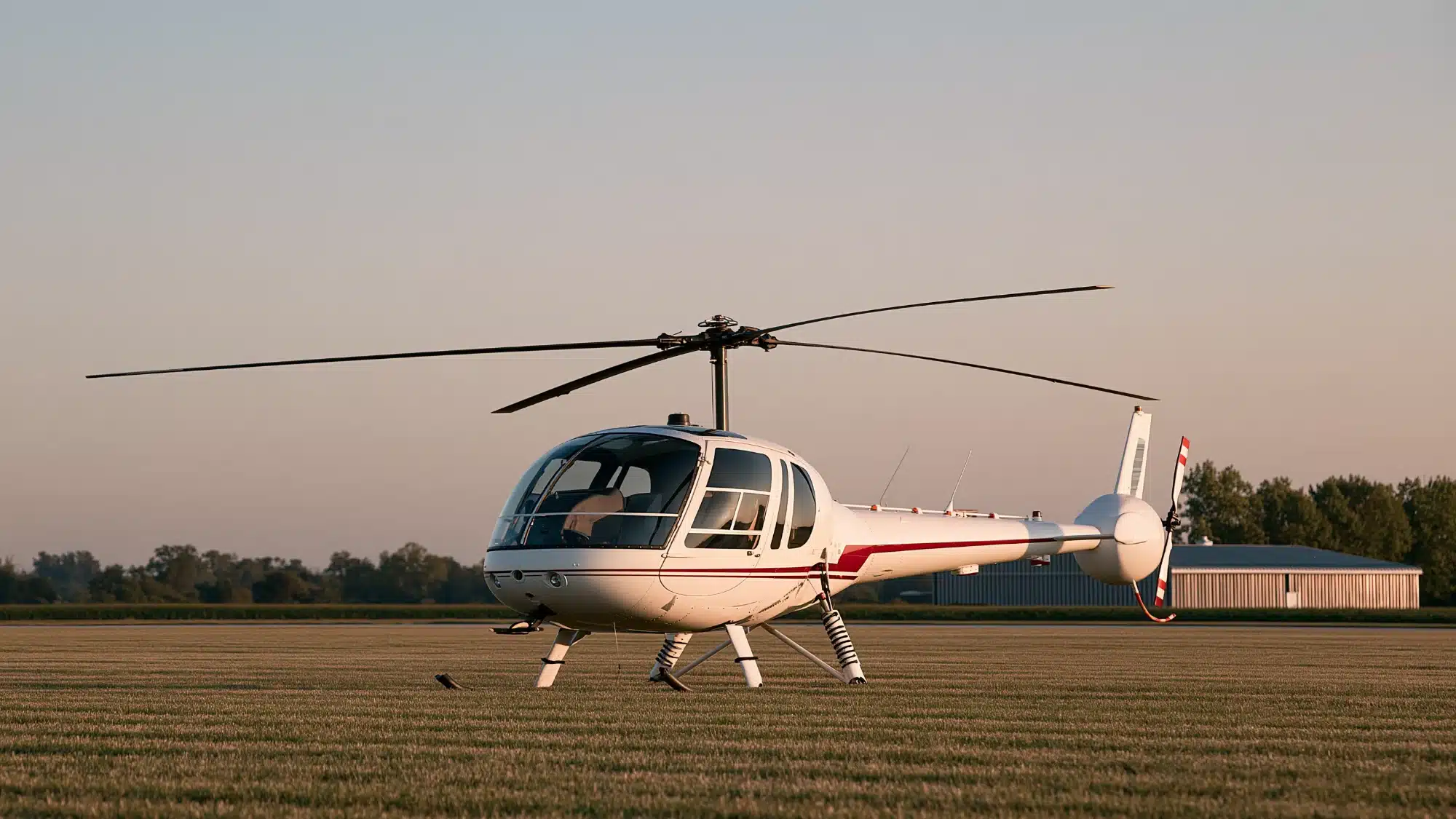
Enstrom F-28s and 280s reach us from private owners, from estates and from the occasional school or utility operator. F-28A and C models, the turbocharged F-28F Falcon, and the 280 Shark, 280C and 280FX all share the same three-blade articulated rotor system and a Lycoming piston engine driving the rotor through a belt-and-clutch system. Many have been parked because a component reached its overhaul time, or because the owner's medical or budget did. The company has changed hands and come back into production, so parts and factory support exist, and a timed-out Enstrom is still a helicopter a school or a rebuilder wants.
What moves the number on an Enstrom
Component times. The main rotor hub and blade grips, the tail rotor, the main and tail gearboxes and the drive belts each carry their own overhaul or retirement times. Pull the component status sheet, or tell us roughly what you remember; the hours and calendar dates on the majors are what we need first.
Engine and turbocharger. A Lycoming HIO-360, turbocharged on the C, F and 280 models, with time since overhaul, any chip-light or metal history and how long it has sat. A helicopter that has been parked for years needs the drivetrain looked at before anyone turns the rotor, and we arrange that inspection rather than assume.
Damage and dynamic component history. Any hard landing, sudden stoppage or blade strike changes the status of every dynamic component. If it happened, the records will show it, and we would rather build the plan around it than discover it.
Records and configuration. Complete airframe, engine and component logs give the helicopter the widest market. Partial records change where it goes, usually to a school or a rebuilder, and have never stopped a donation. Tell us about floats, a cargo hook, dual controls or other installed equipment while you are at it.
How an Enstrom gets to us
Helicopters rarely ferry far. An Enstrom with current inspections and a short distance to cover can be flown by a pilot experienced in the type; most move by truck, with the main rotor blades removed and crated and the fuselage on a cradle or trailer. We handle the disassembly with a mechanic who has worked the type, so it arrives ready to be inspected rather than argued about. Every route is at our cost.
What the first call covers


What you can deduct for this aircraft
Most Enstroms sell rather than being retained, so most donors deduct the gross proceeds reported on Form 1098-C. A timed-out airframe that goes to a maintenance school and stays there as a training aircraft is the common exception, and it is valued differently, so ask about that path on the first call. Either way the figure usually clears $5,000: plan on a qualified appraisal and Form 8283 Section B. The appraisal is your own expense and your own choice of appraiser, because the IRS requires it be independent of us.
We sign Section B as the recipient charity, and the IRS requires your appraiser be independent of us.
Rules for aircraft gifts are in IRS Publication 526, valuation in Publication 561. Nothing here is tax advice — confirm your figures with your CPA. How the deduction works · FAA paperwork
Other models in this class
Start with the N-number
We will pull the registry record before we call you back.