
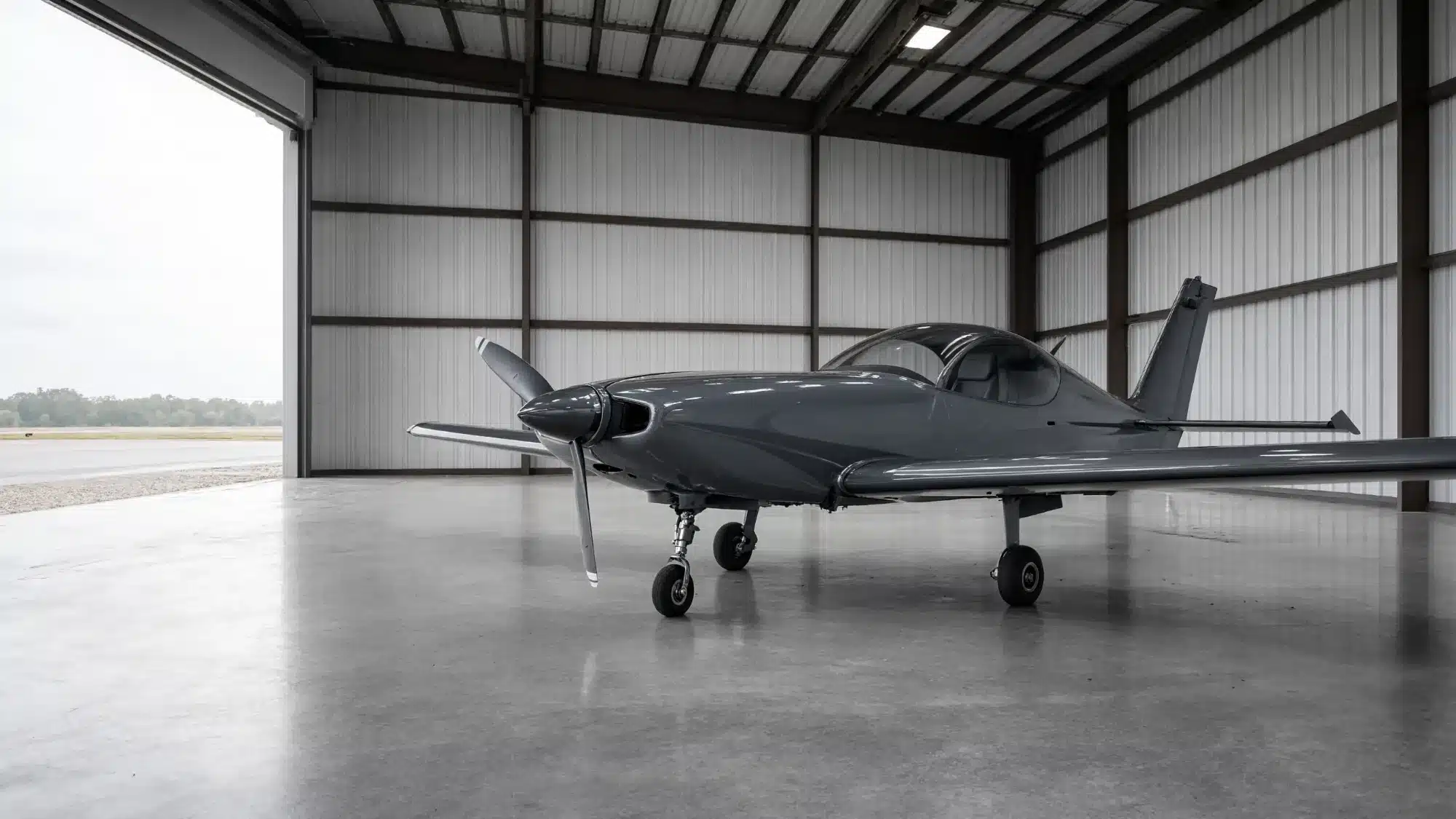
Lancairs arrive from builders who did not finish, from owners whose insurance or currency made the airplane impractical, and from estates. These are fast, slick airframes with real transition requirements, and the buyer pool is correspondingly specific. That is not a problem for a donation — it changes who the recipient is likely to be, and it makes an honest read of the airframe more useful to you than an optimistic one.
What moves the number on a Lancair
Model and performance class. A 235 or 320 is a different proposition from a IV-P or a Legacy. Turbine and pressurised examples narrow the field further still. Tell us which and we will tell you realistically who the recipient is likely to be.
Build quality and documentation. As with any composite airframe, what cannot be seen matters, and the builder's log and layup records are what a buyer's technical review relies on. On the faster models this documentation carries more weight than on almost any other homebuilt.
Engine, and what has been done to it. Lycoming and Continental installations, frequently with modifications, turbonormalising or non-standard cooling. Document what is installed, what was changed and by whom, as far as you know it.
Airframe history and any damage. Gear issues and hard landings are not unknown on retractable high-performance homebuilts. If there is repair history, the records will show it — telling us early shapes the plan and nothing disclosed unwinds the donation afterwards.
How a Lancair gets to us
We are careful here. A flying Lancair is ferried only by a pilot with genuine time in type, and if we cannot put the right pilot in the seat, it goes on a trailer instead — that is a decision we make on safety rather than cost. Projects move with composite-appropriate cradles, and the engine, panel and crated sub-assemblies travel with the airframe. All of it at our cost.
What the first call covers


What you can deduct for this aircraft
Flying Lancairs sell, and given the performance and equipment these carry, the figure is usually well above $5,000 — so plan on a qualified appraisal and Form 8283 Section B. Unfinished airframes are more often placed with technical programs as instructional material, valued by appraisal rather than proceeds. On the faster and pressurised models, use an appraiser who knows high-performance homebuilts; a generalist will either undervalue the airframe or misjudge the modifications.
The appraisal is the donor's expense and the donor's choice of appraiser; we sign Form 8283 Section B as the recipient charity.
Rules for aircraft gifts are in IRS Publication 526, valuation in Publication 561. Nothing here is tax advice — confirm your figures with your CPA. How the deduction works · FAA paperwork
Other models in this class
Start with the N-number
We will pull the registry record before we call you back.