
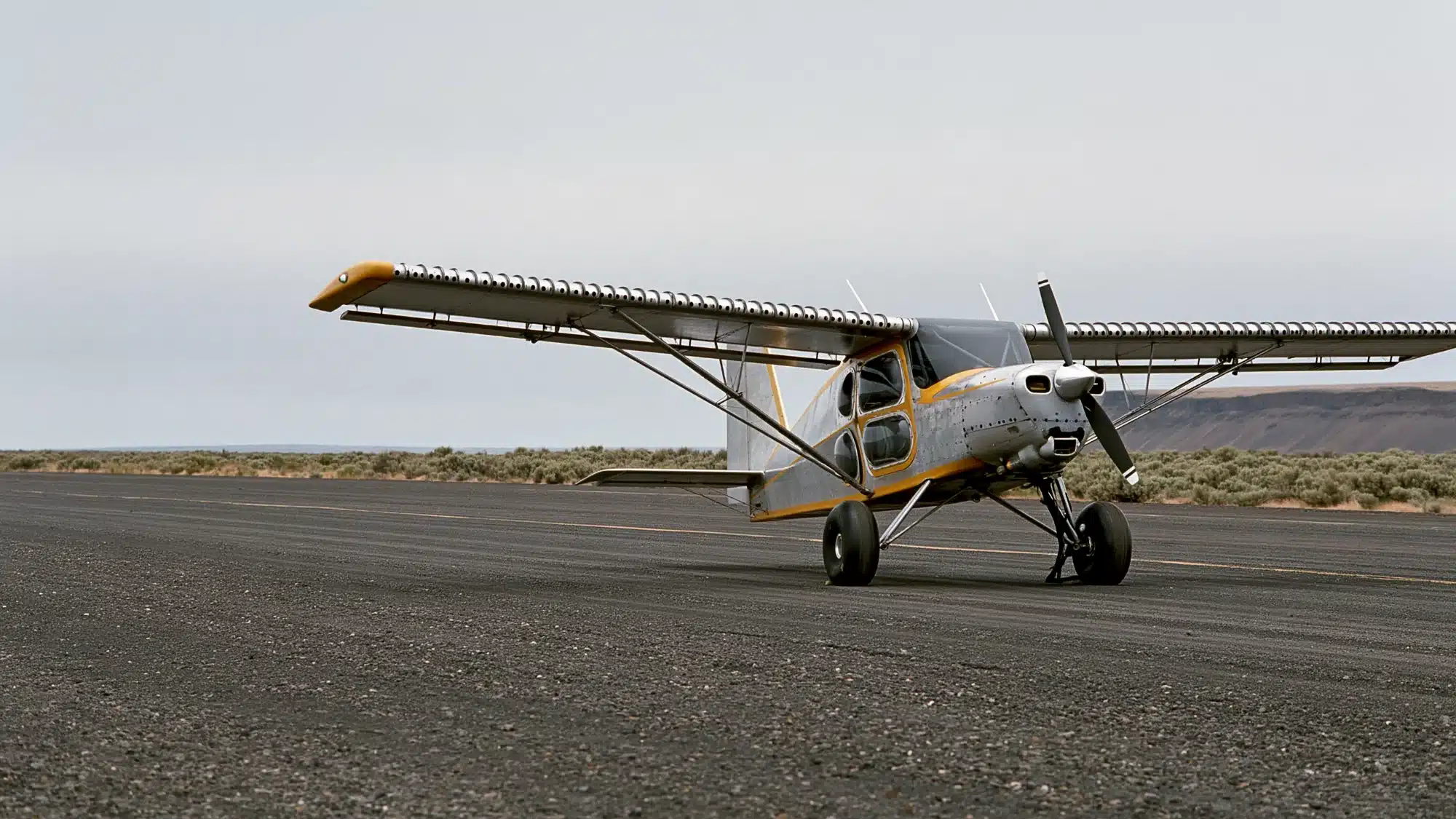
CH 750s reach us from builders who finished and stopped flying, from builders who never finished, and from estates. The all-metal STOL kit is popular with first-time builders, so projects vary widely in completion, and engines range from Rotax and UL Power to Continental O-200s and Corvair conversions. Schools and builders' groups value unfinished airframes as well as flying ones.
What moves the number on a CH 750
Completion stage and builder log. For a flying aircraft, the condition inspection date and the operating limitations. For a project, how far it got, and whether the builder's log and photographs exist. A documented project is worth several times an undocumented one.
Engine and firewall-forward package. Tell us what is installed, or what is still crated, and where it came from. Hours, the last rubber change on a Rotax, and any conversion paperwork all matter.
Kit completeness. For projects, the question is what is still in boxes and what is missing. A complete kit with the finishing parts is a genuine asset; a partial kit is a harder placement, though still one we will take.
Rivets and workmanship. Pulled rivets and a straightforward structure make inspection simple. We ask whether a technical counselor or another builder has looked at the work, and whether any parts were rebuilt.
Flying, trailering, or crating
A flying CH 750 is ferried by a pilot current in the type, with the operating limitations reviewed first. Projects come out on a trailer, and we bring the cradles and the packing material. Wings come off with simple hardware, which makes trucking straightforward. Every route is at our cost.
What the first call covers


What you can deduct for this aircraft
A flying CH 750 usually sells and usually clears $5,000, so the deduction is normally the gross proceeds on Form 1098-C with a qualified appraisal and Form 8283 Section B. Projects vary: many come in under $5,000 and stay on Section A, while a complete kit with its engine can cross the threshold. A project that goes to a school and is used for instruction may support a fair market value basis. Any appraisal is your own expense and your own choice of appraiser; the IRS requires it be independent of us.
We sign Section B as the recipient charity, and the IRS requires your appraiser be independent of us.
Rules for aircraft gifts are in IRS Publication 526, valuation in Publication 561. Nothing here is tax advice — confirm your figures with your CPA. How the deduction works · FAA paperwork
Other models in this class
Start with the N-number
We will pull the registry record before we call you back.