
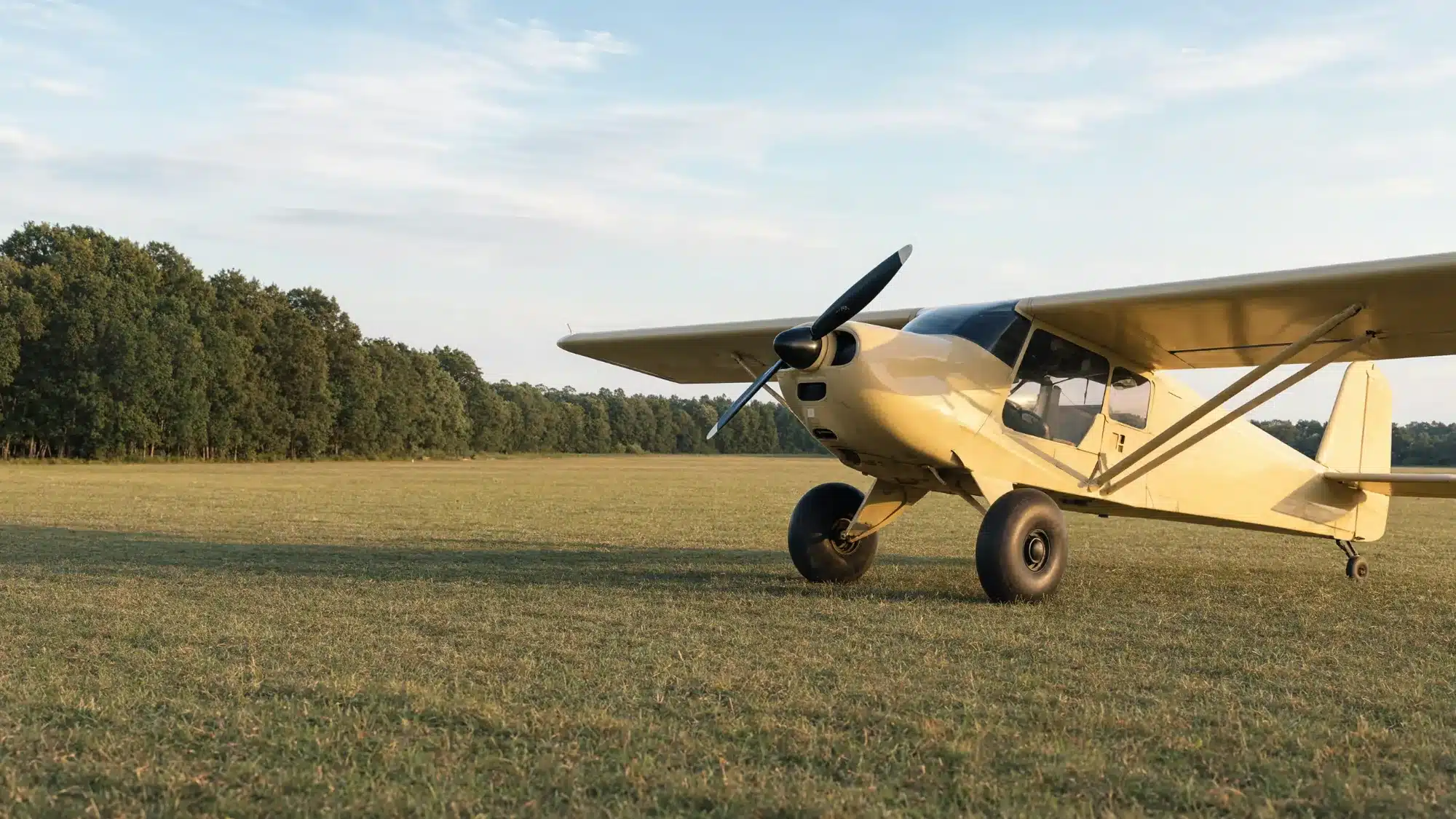
Kitfoxes come from builders who finished and stopped flying, builders who never finished, and owners whose private strip was sold out from under them. The folding wing is the practical detail that makes these easy: an airframe that would otherwise need a crew and a crane fits on a trailer in an afternoon. Models from the early Series 5 through the Super Sport all appear, with Rotax, Continental and Jabiru installations.
What moves the number on a Kitfox
Model, and how it is registered. Series 5, 6, 7, Super Sport, and whether it is experimental amateur-built or an S-LSA. The registration category decides the paperwork; the model decides the buyer.
Engine, and which one. Rotax 912, Continental O-200, Jabiru and others all appear in this fleet. Tell us what is installed and roughly what it has on it, plus the last rubber replacement if it is a Rotax.
Fabric condition and recover date. Covering process and approximate age. Fabric on a Kitfox is a manageable job, which keeps even a tired airframe attractive to a builder rather than writing it off.
Completion stage, if it is a project. How far it got, whether the builder's log survives, and what is still in boxes. A documented project with the firewall-forward package is a genuine asset; an undocumented partial kit still has a home, usually with a school or chapter.
How a Kitfox gets to us
The wings fold, so most Kitfoxes go straight onto a trailer with no disassembly beyond that — frequently the same day we arrive. Flying examples can be ferried by a pilot current in tailwheel aircraft where the distance justifies it. Projects come out with the boxes, the jigs and whatever is still crated. We bring the trailer and the crew and cover the cost.
What the first call covers


What you can deduct for this aircraft
A flying Kitfox sells to another sport or tailwheel pilot and your deduction is the gross proceeds on Form 1098-C — often near or above $5,000 depending on engine and equipment. Projects and partial kits go more often to schools, EAA chapters and youth aviation programs as teaching material, which is significant intervening use and is valued by appraisal instead. Many project donations in this class land under $5,000, where no appraisal is required at all.
Where an appraisal applies it is the donor's expense and the donor's choice of appraiser; we sign Form 8283 Section B as the recipient charity.
Rules for aircraft gifts are in IRS Publication 526, valuation in Publication 561. Nothing here is tax advice — confirm your figures with your CPA. How the deduction works · FAA paperwork
Other models in this class
Start with the N-number
We will pull the registry record before we call you back.