
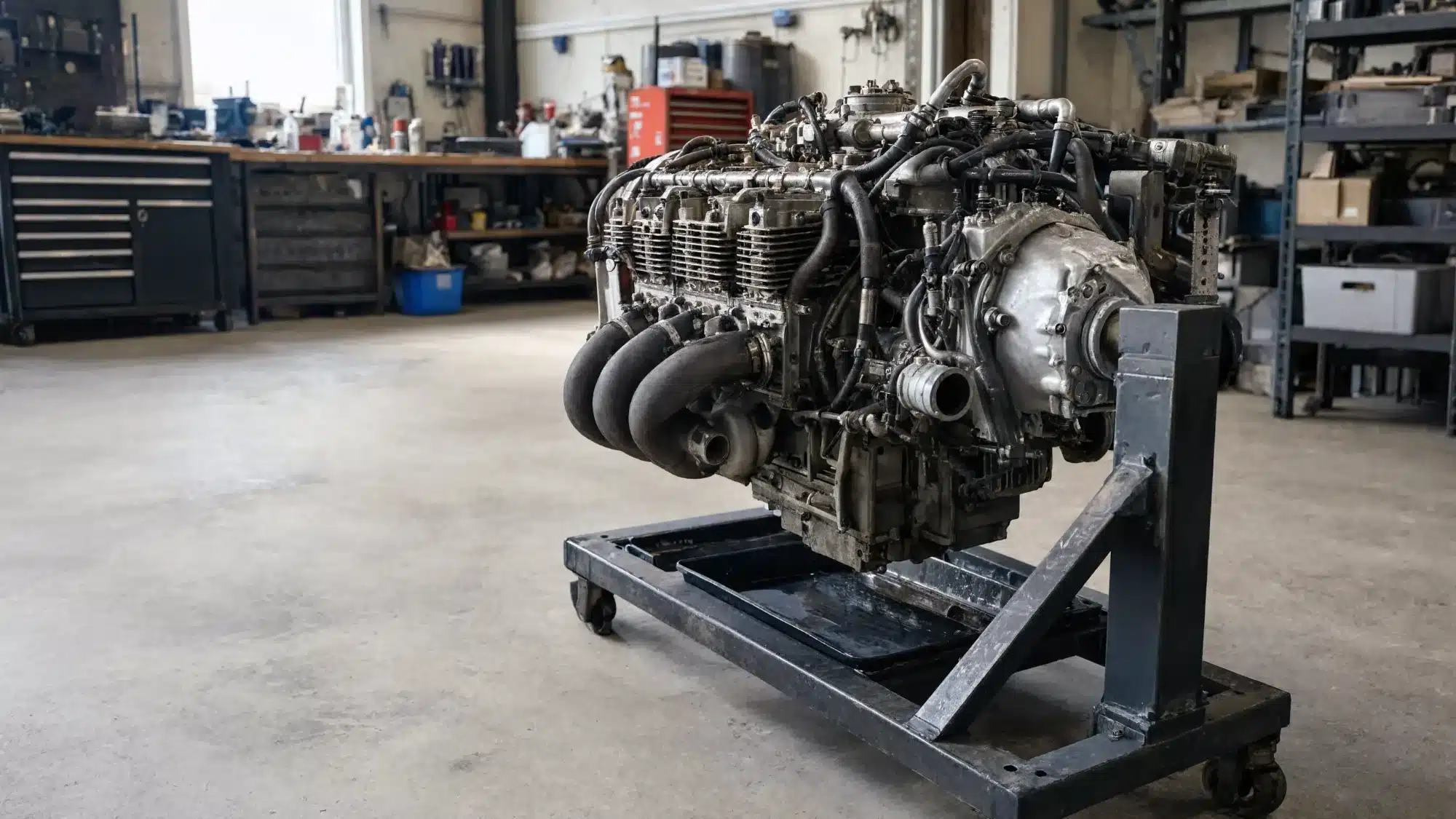
Lycomings and Continentals from a field overhaul that was never installed, run-out cores pulled at overhaul, turbine sections and PT6 modules from a teardown, cylinder sets, mags, carburetors, fuel servos, starters and accessory cases. Engines come to us from hangar cleanouts, shop closures, abandoned projects and estates. A complete engine with its logbook is inventory; a stripped case is training material — both are taken, and both are deductible.
What shapes the value of a donated engine
Logbook and time since overhaul. The engine log is the difference between a known asset and a guess. Time since overhaul, whether that overhaul was a field overhaul, a factory reman or a top, and who signed it all matter. If the log is gone, the engine is still worth donating — it simply moves as a core or a teaching engine rather than as an installable powerplant.
Accessories still attached. Magnetos, carburetor or fuel servo, starter, alternator, oil cooler and baffling make up a large share of what an engine brings. The same engine with those parts missing is worth a fraction as much. If accessories were removed and boxed separately, keep them with the engine and tell us.
Preservation and calendar time. An engine pickled properly and stored indoors is a different proposition from one that sat on a pallet in a corner for eight years. Internal corrosion is what any buyer’s mechanic finds first, and calendar time matters as much as hours on a stored engine. Tell us how long it has been off the airplane and whether it was preserved.
Sudden stoppage and known damage. A prop strike, sudden stoppage or metal in the filter changes an engine from installable to core. That is not a reason to skip the donation — cores have a real market and schools want teardown engines — but it needs to be on the table from the first call.
Stands, pallets and liftgates
Engines move by freight as single items. We arrange the crate or the pallet, the strapping and the liftgate where there is no dock, and we handle engines on stands without asking you to dismount them. Cylinder sets, accessories and small components go in boxes we send. Where an engine is still installed in an airframe you are also donating, it stays where it is and travels with the aircraft. Packing and freight are our cost.
What the first call covers


What you can deduct for a donated engine
A serviceable engine with its logbook can clear $5,000 on its own, which puts it in appraisal territory; a run-out core usually does not. Most donated engines are sold, so the basis is gross proceeds — what the engine actually brought, reported to you after the sale. Where a maintenance program keeps the engine as a teardown or run-up trainer rather than selling it, a fair market value basis can apply instead.
Above $5,000 you will need a qualified appraisal and Form 8283 Section B. Similar items are aggregated, so several cores and a crate of cylinders can reach the threshold together even when no single item does. The appraisal is your own expense and your own choice of appraiser — the IRS requires it be independent of us. We sign Section B as the recipient charity.
Rules for non-cash gifts are in IRS Publication 526, valuation in Publication 561. Nothing here is tax advice — confirm your figures with your CPA. How the deduction works · FAA paperwork
Other donations in this class
Start with the data plate
Make, model and serial number off the data plate, plus a photograph of the engine as it sits, is enough for us to give you a plan.
Tell us about the engine
Three short steps. Only your name, phone and email are required — the rest you can answer from memory, skip, or leave to the phone call. Times and overhaul history shape the plan, never the answer; we take engines at every point in their life, including run-out cores. We carry the cost of pickup, transport and filing.
Rather talk it through? (888) 228-7320
An intake coordinator reads every submission and calls you back. We never sell or share your information.