
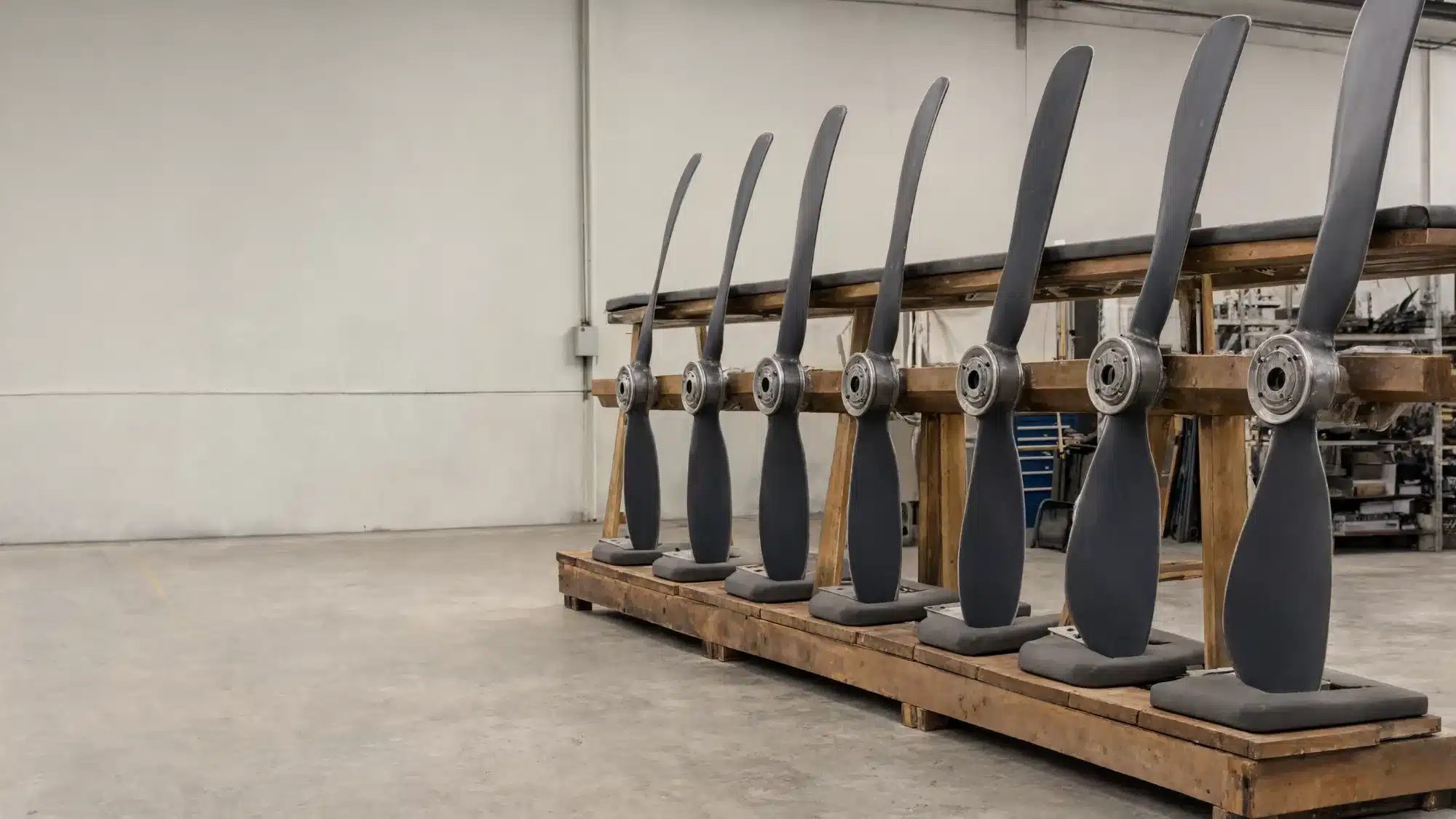
McCauleys and Hartzells off an upgrade, wooden props from a vintage restoration, fixed-pitch blades pulled at overhaul, governors, spinners, bulkheads and the odd blade with a nick that ended its flying life. Propellers turn up in hangar corners and shop racks more than almost any other component, and they are among the easiest donations to arrange: one blade set, one crate, one afternoon.
What shapes the value of a donated propeller
Overhaul date and the calendar. Propeller overhaul intervals run on years as well as hours, and on a prop that has been off the airplane it is nearly always the calendar that expired. Time since propeller overhaul, the shop that did it and the date are what a buyer asks first. No record is not a disqualifier; it changes who the prop suits.
Blade condition and prior repairs. Nicks, filed leading edges, blade length after repeated dressing, and any record of a prop strike all determine whether a blade can be overhauled again or is at the end of its life. A blade past repair limits still has value as shop tooling, display material or teaching stock — tell us what you know and let us sort it.
Hub, governor and spinner together. A constant-speed prop with its hub, governor, spinner and bulkhead is a complete assembly and worth far more than the parts scattered. Fixed-pitch props should come with their bolts and any spacer. Keep the set together and crate it as one item.
Storage and corrosion. Aluminum blades stored flat and indoors stay serviceable; blades leaned against a damp wall for a decade pit at the tips and the hub bore. Wooden props are more sensitive again — delamination and dry rot end them. Indoors and dry is the whole story here.
Crating and shipping propellers
Propellers ship well. We send a crate sized to the blade set, or build one on site for anything unusual, and arrange freight with a liftgate where there is no dock. Small fixed-pitch props and spinners go by parcel. A rack of a dozen props goes on a pallet, and for a shop closeout we come and sort rather than asking you to inventory first. Crating and freight are our cost.
What the first call covers


What you can deduct for donated propellers
A single propeller rarely reaches $5,000, so most donors here file Form 8283 Section A on gross proceeds — what the prop actually brought at sale, reported to you afterwards. A recently overhauled constant-speed assembly with its governor and spinner is the exception that can cross the threshold on its own.
The aggregation rule matters more than the single-item value: similar items are added together, so a rack of eight props can pass $5,000 as a group and trigger the qualified appraisal and Section B even though each blade set is modest. That appraisal is your own expense and your own choice of appraiser, because the IRS requires it be independent of us. Where a school keeps props as teaching stock rather than selling them, a fair market value basis can apply instead.
Rules for non-cash gifts are in IRS Publication 526, valuation in Publication 561. Nothing here is tax advice — confirm your figures with your CPA. How the deduction works · FAA paperwork
Other donations in this class
Start with the hub data plate
Make, model and the last overhaul date, plus a photograph of the blades, and we will arrange the crate.