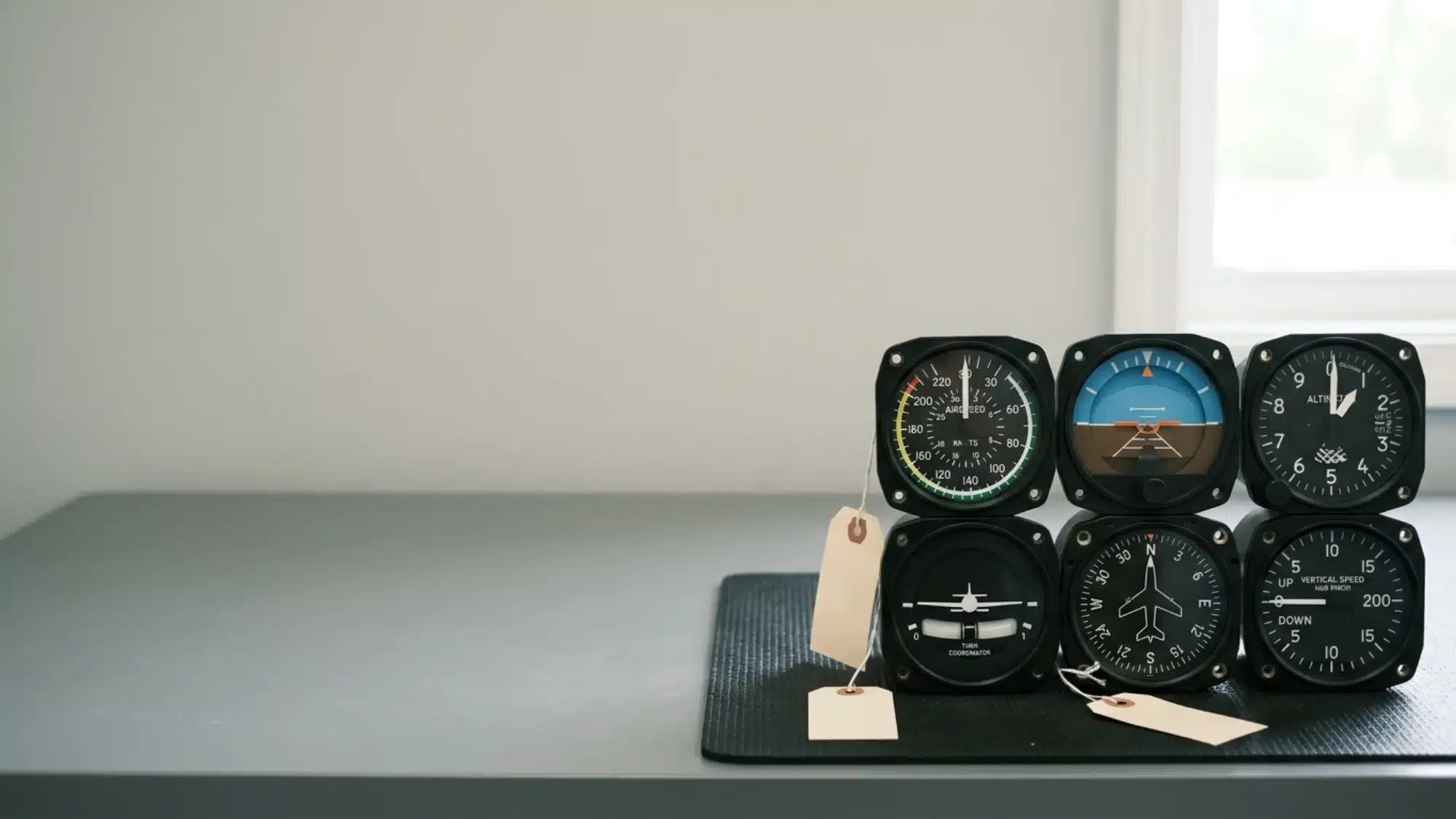
Instrument donations usually start with a panel upgrade: the six-pack and the engine gauges came out, went into a cabinet, and have been there since. Shops closing down, estates and parts collections add vacuum pumps, spare gyros and boxes of indicators. Schools, restorers, homebuilders and shops still supporting analog panels all want this material, and the paperwork is lighter than anything involving an airframe.
What shapes the value of removed instruments
Tags and traceability. An instrument with an 8130-3 or a repair-station tag can go into a certificated aircraft. Untagged instruments still have a home with homebuilders and A&P programs, but they move as experimental-market or training material. Send a photograph of any tag.
Gyros and storage. Attitude and heading gyros wear even in storage, and a gyro that has sat for years usually needs overhaul before it is installed. That lowers the value without removing it. Tell us whether they are vacuum or electric.
Sets and matching. A complete, matched six-pack or a full set of engine gauges from one panel is worth more than loose units. Keep sets together and box them together.
Condition. Cracked glass, faded faces and water damage move an instrument toward core. Dry, indoor storage keeps it serviceable. Say what you know; we sort the rest.
How boxed instruments reach us
Instruments ship by parcel or freight, and we send the packing material. Small quantities go in boxes with foam; a cabinet or a shop closeout goes on a pallet we provide, with a liftgate arranged where there is no dock. For anything substantial we come to you and inventory on site. Packing, freight and paperwork are our cost.
What the first call covers


What you can deduct for donated instruments
Instruments almost always sell rather than get retained, so the deduction is the gross proceeds, reported to you after the sale. Individual instruments are well under $5,000, so Form 8283 Section A is the common case and no appraisal is needed. The IRS looks at similar items together, though, so a large collection can cross $5,000 as a group.
Where instruments go to a maintenance school that uses them in training rather than selling them, a fair market value basis can apply instead. If your total for similar items runs over $5,000 you will need a qualified appraisal and Section B; that appraisal is your own expense and your own choice of appraiser, because the IRS requires it be independent of us. We sign Section B as the recipient charity.
Rules for non-cash gifts are in IRS Publication 526, valuation in Publication 561. Nothing here is tax advice — confirm your figures with your CPA. How the deduction works · FAA paperwork
Other donations in this class
Start with a photograph of the drawer
One picture of the instruments as they sit tells us more than a list, and we will come back with a plan.