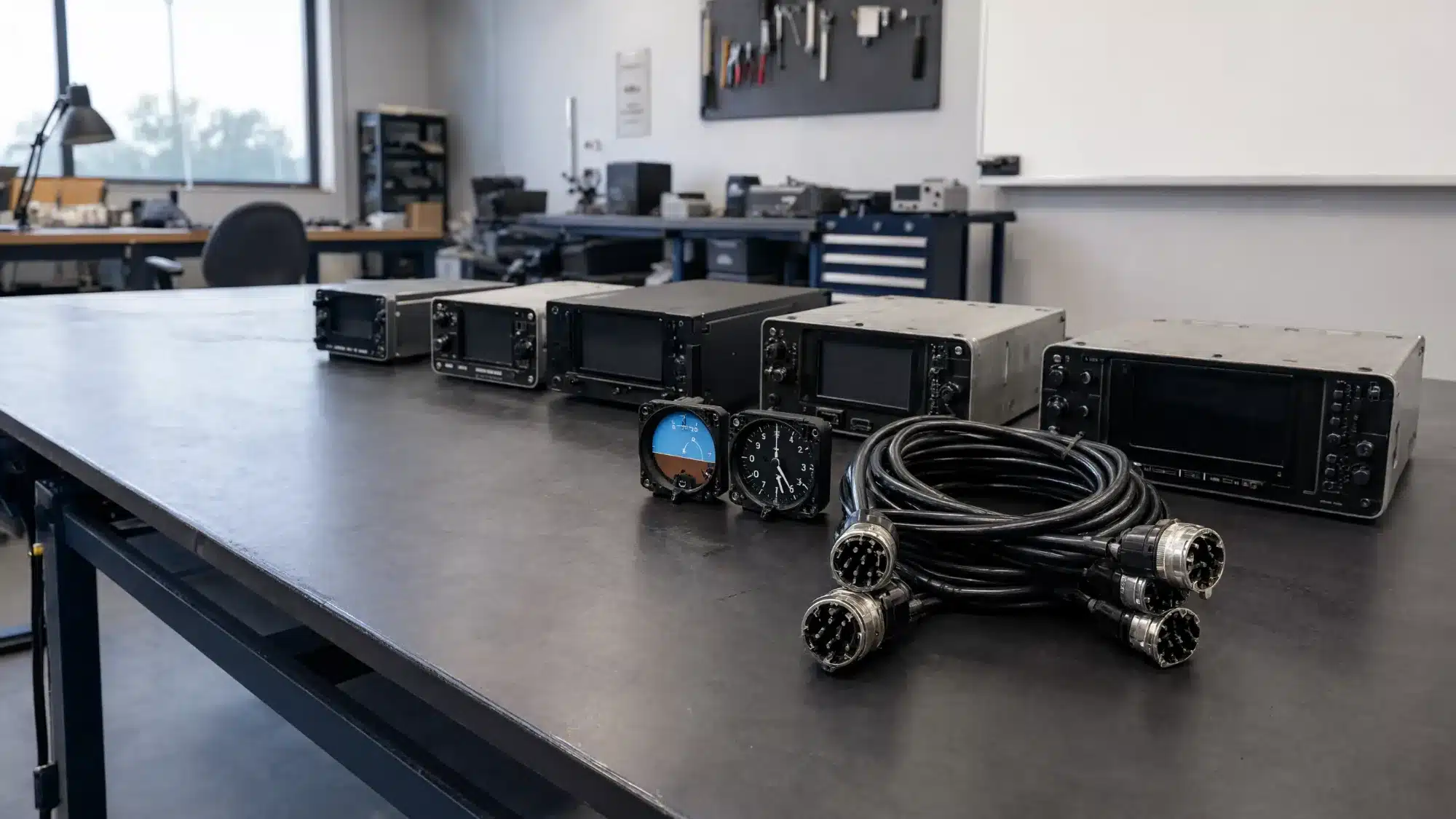
Most avionics donations start the same way: the airplane got a new panel, the old boxes went into a hangar cabinet, and four years later nobody knows what to do with them. Steam gauges from a vacuum panel, first-generation GPS navigators, mode C transponders, ADF and DME units, audio panels, intercoms, ELTs, spare indicators and the trays and wiring looms that make them installable. Schools, avionics shops and homebuilders all want this material, and the paperwork is lighter than anything involving an airframe.
What shapes the value of removed avionics
Tags and traceability. A unit with an 8130-3 or a repair-station yellow tag can be installed in a certificated aircraft tomorrow. An untagged unit still has a home — homebuilders and A&P programs use a great deal of untagged equipment — but it moves as experimental-market or training material rather than certified inventory. Send a photograph of any tag that came with the box.
Trays, connectors and manuals. A navigator without its tray and backplate is a fraction of a navigator with both. The same goes for rack-mounted units, wiring harnesses cut at the connector, and install or maintenance manuals. Keep sets together and box them together — it is the single biggest thing you can do for the value.
Generation and mandate status. ADS-B capability is the dividing line in the current market. Units that can meet the 2020 mandate are in demand; older transponders and navigators are useful mainly as training equipment or as parts for shops that still support them. Both are worth donating, and we will tell you which is which.
Storage condition. Dry, indoors and boxed is what keeps a unit serviceable. Corroded connector pins, water staining and a decade in an unheated shed move a box from inventory to core. If displays or CRTs are cracked, say so; the chassis and boards may still be wanted.
How boxed avionics reach us
Avionics ship by freight or parcel, and we send the packing material. Small quantities go in boxes with anti-static bags and foam; a full cabinet or a shop closeout goes on a pallet we provide, with a liftgate arranged where there is no dock. For anything substantial we come to you and inventory on site rather than asking you to list forty boxes first. Packing, freight and paperwork are our cost.
What the first call covers


What you can deduct for donated avionics
Avionics almost always sell rather than get retained, which puts most donors on gross proceeds — what the equipment actually brought, reported to you after the sale. Individual boxes are usually well under $5,000, so Form 8283 Section A is the common case and no appraisal is needed. What surprises donors is the aggregation rule: the IRS looks at similar items of property together, so a cabinet of thirty units can cross the $5,000 threshold as a group even though no single box comes close.
Where equipment goes to a maintenance school or a youth program that puts it to work in training rather than selling it, a fair market value basis can apply instead. If your total for similar items runs over $5,000 you will need a qualified appraisal and Section B; that appraisal is your own expense and your own choice of appraiser, because the IRS requires it be independent of us. We sign Section B as the recipient charity.
Rules for non-cash gifts are in IRS Publication 526, valuation in Publication 561. Nothing here is tax advice — confirm your figures with your CPA. How the deduction works · FAA paperwork
Other donations in this class
Start with a photograph of the shelf
One picture of the boxes as they sit tells us more than an inventory list, and we will come back with a plan.