
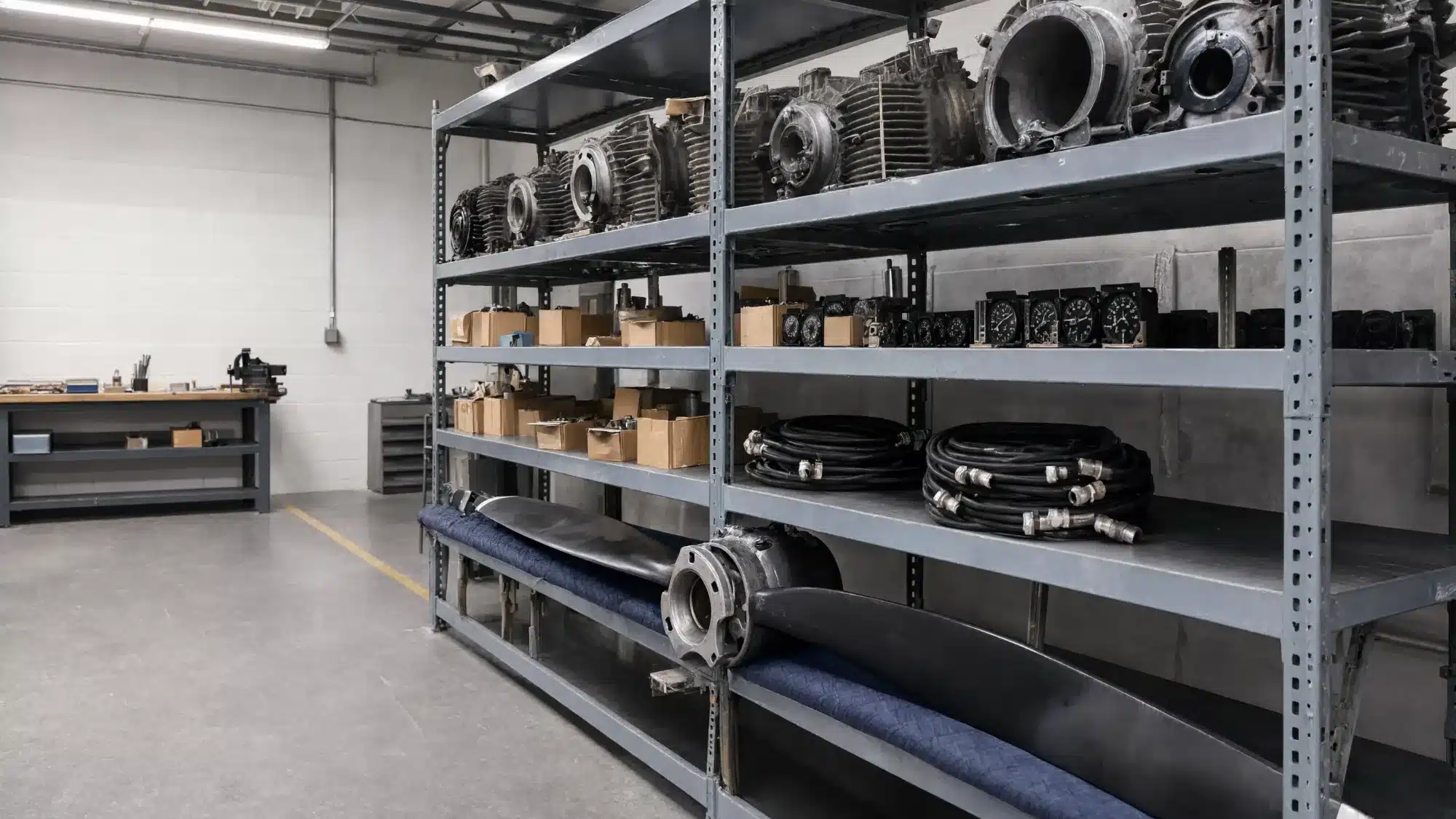
Hangar cleanouts, shop closures, estates with forty years of accumulated inventory, and the parts left over when a project was abandoned. This is the second most common thing we are asked about after whole aircraft, and the easiest to say yes to. If your question is whether it is worth anyone's time, the answer is almost always yes — and if it is not, we will say so rather than waste your afternoon.
What we take care of
You do not need to inventory a hangar before calling. Sorting, packing and freight are ours.
What shapes the plan for your parts
Three things, in this order.
Traceability, where it exists. Serviceable tags, 8130-3 forms and yellow tags make a part immediately installable. Untagged material is still welcome and still moves, as training stock or core. Do not sort by paperwork before we arrive.
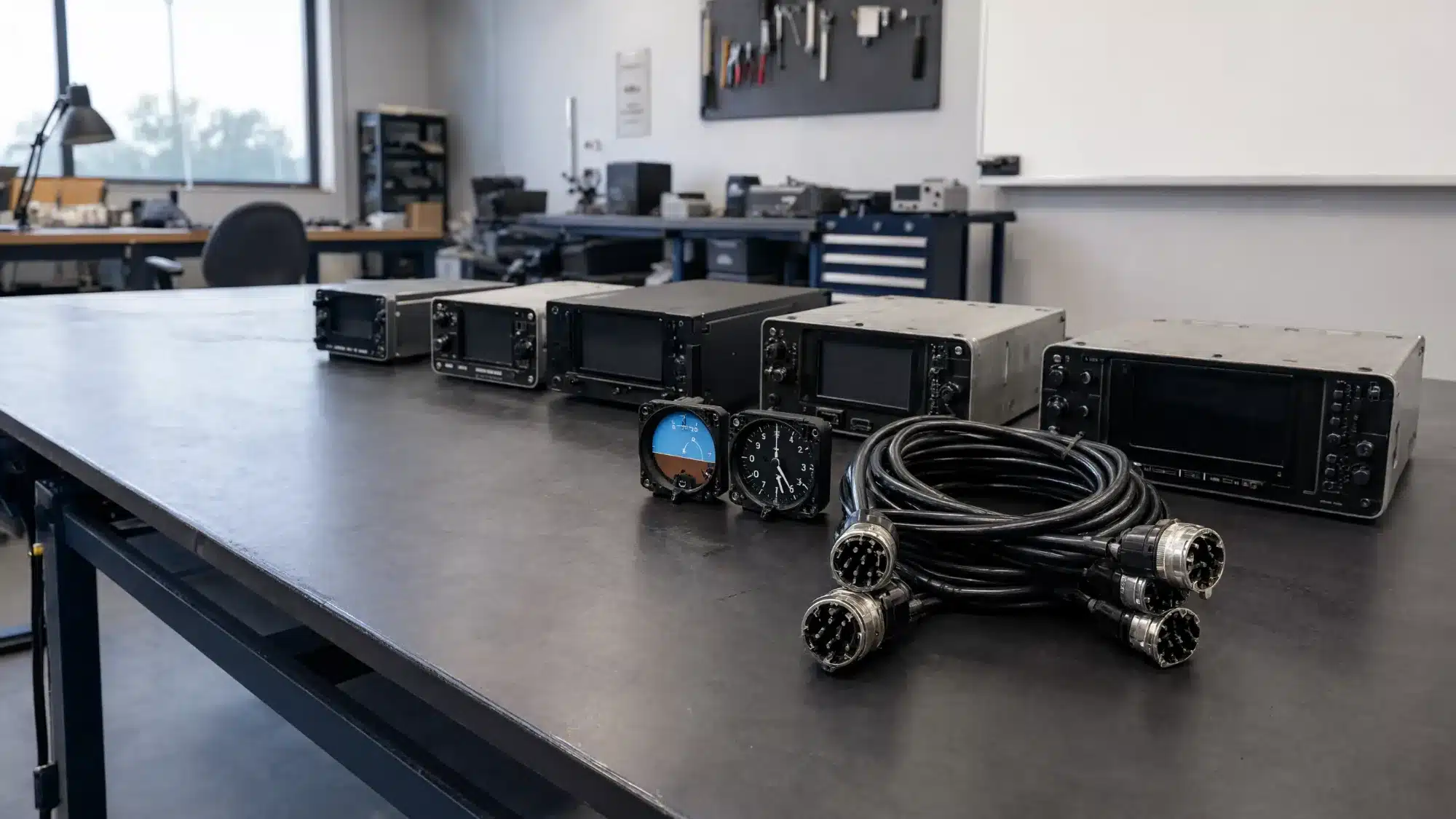
Completeness. An engine with its accessories and logbook is worth far more than the same engine missing mags and carburetor. Avionics with trays, connectors and manuals likewise. Keeping sets together is the one thing that genuinely helps.
How it was stored. Dry and indoors versus a decade in an unheated shed decides most of it. Either way we take it; storage history just tells us where it goes.
Pallets, not ferry pilots
Parts move by freight. We send packing material and pallets for anything substantial, arrange a liftgate where there is no dock, and handle engines on stands as single items. For a full hangar cleanout, we will come to you and sort on site rather than asking you to inventory it first.
Maintenance schools are the largest recipients. Run-out engines, removed instruments and damaged control surfaces are exactly what an A&P program needs and rarely has enough of.

Tell us what you have
Three short steps. Only your name, phone and email are required — everything after that you can answer from memory, skip, or leave to the phone call. Nothing here commits you to anything. We carry the cost of pickup, transport and filing; an appraisal, where one is required, is the donor's own expense.
Rather talk it through? (888) 228-7320
An intake coordinator reads every submission and calls you back. We never sell or share your information.
What you can deduct for parts and avionics
Parts are normally sold or distributed to schools, so your deduction follows what the material actually brings. Aggregate value matters: a shop cleanout can total well past $5,000 even when no single item does, and at that point a qualified appraisal applies to the group. We will flag it if your donation is heading there.
| Situation | Deduction basis | Documents |
|---|---|---|
| Sold with life remaining on components | Gross proceeds of the sale | Form 1098-C within 30 days of sale |
| Taken by a maintenance school as instructional equipment | Qualified appraised value, as significant intervening use | 1098-C with the intervening-use certification |
| Timed-out airframe recovered for parts | Proceeds of the recovered components | 1098-C reflecting the recovery |
| Operator-owned and depreciated | Limited to adjusted basis; recapture applies | Your CPA should confirm before you assume a figure |
Giving Center cannot value your aircraft and cannot hire your appraiser — the IRS requires that independence, and above $5,000 the qualified appraisal is the donor's responsibility and expense. Rules for vehicle and aircraft gifts are set out in IRS Publication 526, valuation in Publication 561, and the acknowledgment requirement in the Form 1098-C instructions. Claims above $5,000 also need Form 8283 Section B. Nothing here is tax advice; confirm your own figures with your CPA. Full tax detail · FAA paperwork
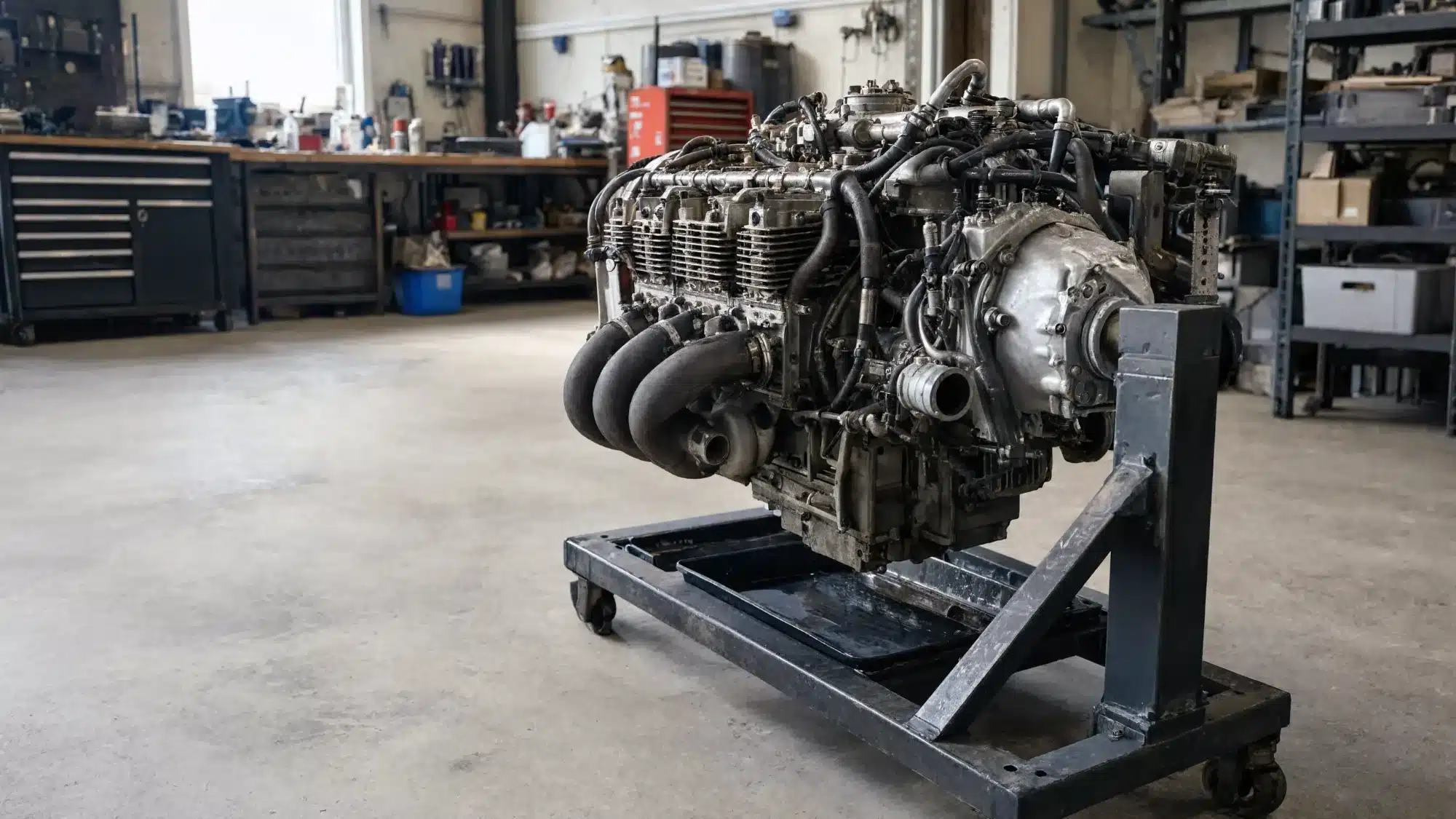
What we take in this class
Related situations: no logbooks · damaged or AOG · inherited aircraft · aircraft with a lien
Ready when you are
Type, hours, logs and where it sits. That is enough for a real answer on the first call. Pickup, transport and filing are ours to cover.